
Reimagining science communication for a brighter future
Advocacy for one of Australia’s worst marine ecological disasters
In 2025, our home state of South Australia was hit with a catastrophic marine algal bloom. The scale, severity, and duration of the bloom was nothing Australia had seen before - and it was killing nearly all major animal groups, from fish to crabs, sea cucumbers to annelid worms, and octopus to sponges.
Zoe worked regularly with the media (e.g. Financial Review, ABC national news) as well as other outreach platforms, talking about the science and the impact of the bloom, as well as the solutions.
Zoe then met the Prime Minister, as well as many senior ministers, as part of a Delegation to Parliament House. The Delegation was spearheaded by the Mayor of Holdfast Bay, Amanda Wilson, alongside many other mayors from regional and metro regions in South Australia. The delegation highlighted the urgent need for a coordinated national response, including permanent monitoring and baseline data collection for the Great Southern Reef. Our advocacy was reflected in the recommendations outlined in the federal inquiry into the harmful algal bloom.
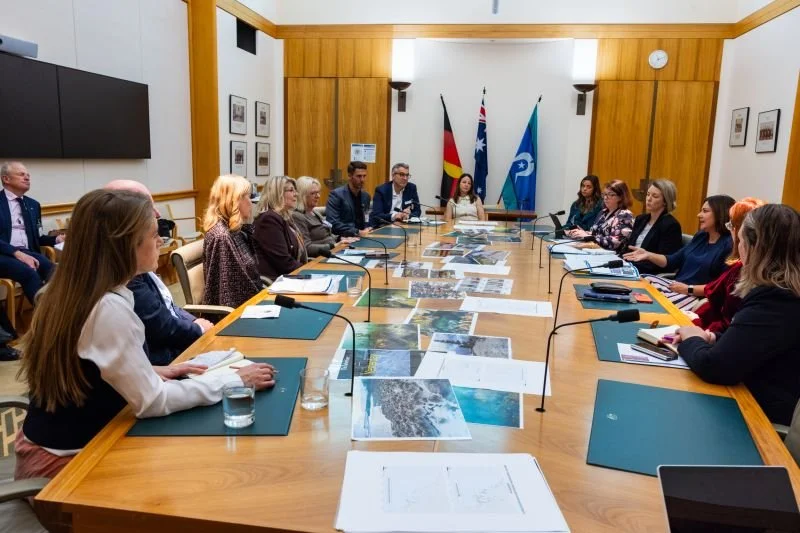
Zoe at Parliament House as part of the algal bloom delegation, led by a team of Mayors. Photo taken by Stefan Andrews (Great Southern Reef Foundation), who was also part of the delegation.

Octopus Estate
Developed by MOD. An interactive game inspired by our research on octopus.
Download now from the App Store or Google Play.


Who Would Win in a Fight Between an Octopus and a Seabird? Two Marine Biologists Place their Bets
See our article in The Conversation

Bored Reading Science? Let’s Change how Scientists Write
Read our paper here. See our article in The Conversation

Select Publications
2021: Better Writing in Scientific Publications Builds Reader Confidence and Understanding
2020: The growth of acronyms in the scientific literature
2019: How can we boost the impact of publications? Try better writing
2018: How to Write a First Class Paper
2017: Publishing with Objective Charisma: Breaking Science’s Paradox